
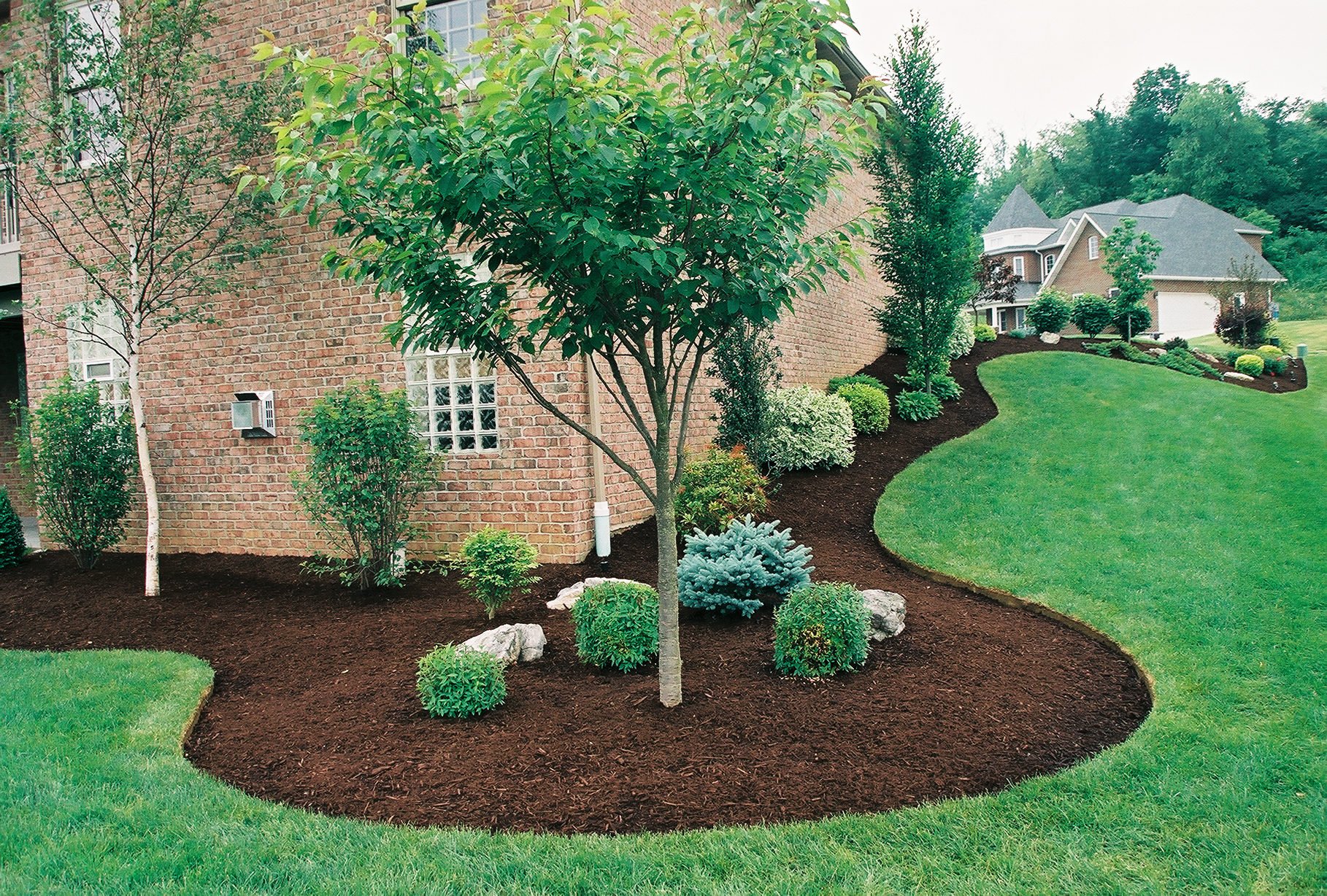
HOA & Community Association Landscaping in Austin, Texas
We design, install, and renovate the common areas your maintenance company cannot: entrances and monuments, amenity centers, detention pond plantings, drought conversions, irrigation rebuilds, and erosion repair. Family-owned and operated, with an itemized bid your board can put in a packet and a guarantee no competitor in this market makes. You do not pay in full until the finished work meets your complete satisfaction.
Call (512) 740-5831
Family-Owned, In the Industry Since 1993 • Licensed & Insured • Itemized Bids for Board Packets • Projects from $5,000 to $100,000 • You Pay in Full Only When Satisfied
The Short Version for Your Board
You get a landscape contractor who works in projects, not monthly contracts. We walk your common areas with your board or manager, identify what is failing and why, and deliver an itemized bid your board can review, budget, and approve on its own timeline. We handle design, installation, and renovation for entrances, common areas, amenity grounds, detention and retention basins, irrigation, grading, and drainage. We do not bid against your maintenance provider, because we do not do maintenance. And final payment is not due until the completed work meets the board’s complete satisfaction.
Four Things About Austin HOA Landscaping That Cost Communities Money
Thirty-plus years of installs across the Austin metro, and these are the four issues we watch boards pay for twice.
Your common areas are on a different watering schedule than your residents, and it is permanent. Austin Water sorts customers into three categories, and HOAs sit in their own alongside public schools and golf course fairways. For Austin Water customers, that means common area automatic and manual irrigation systems run one day per week, on Monday, with hose-end sprinklers and drip allowed Monday and Thursday, in both cases only between midnight and 10 a.m. or 7 p.m. and midnight. Your homeowners water on different days entirely.
Here is the part boards miss. This is not a drought measure waiting to expire. Austin Water has been in the Conservation Stage since September 2, 2025, and the Conservation Stage is the year-round baseline, below Stage 1, in effect even now that the Highland Lakes have recovered. One day a week for common area irrigation is the normal condition, not the emergency. A planting plan that needs more than that is a plan that fails, and most common area plans in this market were drawn for a wetter set of assumptions. We confirm your utility, your category, and your assigned days before we spec a single plant. Communities served by a MUD, a WCID, or by Cedar Park, Leander, or Georgetown follow their own schedules, and we check those too. (VERIFY assigned days and current stage the week of publish. These move with lake levels.)
A 2025 law limits when your association can fine an owner over turf covenants.
House Bill 517 took effect September 1, 2025 and added Section 202.008 to the Texas Property Code. It bars a property owners’ association from assessing a fine for violating a covenant that requires an owner to plant or install grass or turf, requires an owner to maintain green vegetation or turf, or prohibits discolored or brown vegetation or turf. The protection applies while the property is under a drought-related residential watering restriction under which browning could reasonably result, and before the 60th day after that restriction is lifted.
Two honest qualifiers your board should hear, because most vendors will not give them. The statute limits fines. It does not suspend the covenant or the association’s other enforcement remedies. And it is tied to drought-related restrictions, so its application in a service area that is not currently in a declared drought stage is a question for your attorney, not for a landscaping company. What we can tell you is the durable answer either way: streetscape and common area planting that looks intentional at one watering day a week, so the standard your documents set is a standard your community can actually hold. (VERIFY statutory text with association counsel before publish. This is landscape guidance, not legal advice.)
Your board has less authority over drought-resistant landscaping than your documents may claim, and more than your owners think. Texas Property Code Section 202.007 prevents an association from prohibiting an owner from using drought-resistant landscaping or water-conserving natural turf, installing efficient irrigation including drip systems, installing rain barrels or rainwater harvesting, or composting yard vegetation.
What your board keeps is substantial. You may require a detailed description or plan for review and approval before a drought-resistant landscaping or water-conserving turf installation, and while you may not unreasonably deny or withhold that approval, the review right is real. You may restrict the type of turf used in new plantings specifically to encourage or require water-conserving turf. You retain authority over aesthetic regulation of irrigation systems, over gravel, rocks, and cacti, over general yard maintenance standards, and over the size, color, type, and screening of rain barrels visible from the street or a neighboring lot.
Two distinctions that matter and that we see boards get wrong. First, this section governs what you may restrict on an owner’s lot. It does not require the association to permit these installations on property the association owns or that members own in common, so your common areas remain the board’s call. Second, the statute protects water-conserving natural turf. It is not an artificial turf statute. (Section 202.007 also carries a narrow exemption for certain very large developments in certain municipalities. Confirm applicability and all of the above with your association’s counsel. We design compliant common area and demonstration landscapes; we do not draft governing documents.)
Your stormwater basin is a landscape asset and a liability at the same time. Many Austin-area communities take over a basin from the developer. Depending on how it was designed it may be a flood detention facility under the City of Austin Drainage Criteria Manual, a water quality control under the Environmental Criteria Manual, or both, and boards routinely do not know which they have. Where the facility is privately owned, maintenance falls to the owner, which in practice means the association, under Environmental Criteria Manual Section 1.6.3(C). The City inspects most privately owned systems on roughly a three-year cycle, with a re-inspection fee currently around $500 when problems are not corrected.
Boards tend to treat the basin as something to mow. Eroding side slopes, silted inlets, volunteer brush, and bare banks are landscape failures with drainage consequences and inspection exposure attached. Native bank stabilization, correct inlet and outlet treatment, and slope repair cost a fraction of a rebuild. Pull your plat and any recorded maintenance agreement, ask your engineer which manual governs your facility, then let us bid the landscape half. Communities in the ETJ, inside a MUD, or in unincorporated Travis or Williamson County may be under different rules entirely. (Confirm current City requirements and fee amounts before publish.)
Common Area Work We Design, Build, and Renovate
Entrances and monument landscapes. The single highest-return project a board can fund. Monument surrounds, masonry, entry beds, uplighting, and irrigation designed so the community’s front door reads as maintained even in August.
Common area and streetscape renovation. Tired median plantings, failed builder beds, thinning greenbelt edges, and mulch beds that have become weed beds, rebuilt with plants proven at one watering day per week.
Amenity center and pool area grounds. Pool surrounds, clubhouse landscapes, playground and mail kiosk areas, shade plantings, and the hardscape that ties them together.
Drought and turf conversion. Converting high-water common turf to native and adapted plantings, water-conserving turf, and xeriscape, sized to a budget and phased across fiscal years if that is what the reserve allows.
Detention and retention basin plantings. Bank stabilization, native seeding and planting, inlet and outlet treatment, and erosion repair on side slopes.
Irrigation rebuilds and efficiency upgrades. Zone redesign for the HOA watering schedule, drip conversion in beds, controller and sensor upgrades, and repair of the systems the builder left behind.
Grading, drainage, and erosion correction. Common area ponding, washed-out swales, eroding slopes, and the drainage problems that keep generating homeowner complaints.
Hardscape for common areas. Retaining and seating walls, walkways, borders, and masonry, built to the same base and drainage standards as our residential work.
One thing we do not do: ongoing landscape maintenance. No mowing contracts, no monthly service. That is deliberate, and for your board it is useful. We are not competing with your maintenance provider, so nothing we recommend is a pitch to replace them. We build the project, hand off a care specification your maintenance contractor can follow, and leave.
Built Around How Community Associations Actually Buy
Board procurement does not look like a homeowner buying a patio, and vendors who ignore that waste everyone’s time.
1. Walkthrough with your board or manager. We walk the common areas with whoever owns the decision, document conditions, and tell you plainly which problems are urgent, which are cosmetic, and which will get worse and more expensive if deferred.
2. Itemized, packet-ready bid. You get a line-by-line scope and price formatted for a board packet, with each element priced separately so the board can approve, defer, or phase individual items instead of voting the whole thing up or down. Insurance certificates and W-9 included without being asked.
3. Board review on your timeline. We do not chase. Bids hold for [X] days, and we are available for a board meeting, in person or by video, to answer questions directly rather than through your manager. (Confirm bid validity window.)
4. Phased scheduling around your community. Work sequenced around annual meetings, pool season, holiday lighting, and resident traffic, with notice materials your manager can send to homeowners before crews arrive.
5. Walkthrough and handoff. The board or manager walks the finished work with us. Final payment is not due until it meets your complete satisfaction. You receive a care and watering specification written for the HOA irrigation schedule, which your maintenance provider can follow directly.
What HOA Landscape Projects Cost in the Austin Area
Every competitor makes your board request a bid to learn a number. Boards budget a year out, so here are ranges you can plan against. Our projects generally run $5,000 to $100,000, and up.
Entrance and monument landscape renovation
Common area or median bed renovation
Drought and turf conversion
Amenity center and pool area landscape
Detention basin bank stabilization and planting
Irrigation zone rebuild or drip conversion
Common area drainage and erosion correction
What moves the number: total area, rock excavation in the limestone corridor, plant sizes at install, irrigation condition, slope, and site access for equipment. Every bid itemizes all of it, and bids are free.
A note on funding. Texas law does not require associations to commission reserve studies, but your own declaration might, and mortgage lenders effectively do through project eligibility standards. Landscape assets have finite lives that belong in a capital plan the same way a roof does: irrigation controllers and valves, entrance masonry, basin side slopes, and mature plantings all reach the end of their service life on a schedule. We will tell you honestly which items on your property are deferred maintenance that belongs in operating, and which are capital replacements worth putting in a multi-year plan. (Confirm with your association’s counsel and accountant; this is landscape guidance, not financial or legal advice.)
A Family Business, and a Landscaper Who Has Been at This Since 1993
Ben Bretz has owned and operated companies in the lawn and landscape industry since 1993. The promise comes from a line in one of their favorite books, The Go-Giver: offer more in value than you receive in payment. He and his wife Dani have built this one as a family business, and their son Josh grew up watching the work, spent years alongside his father, and joined the business to carry it forward.
For a board, that structure is the whole point. Community associations get churned through account managers and rotating subcontractor crews, and nobody with authority is ever standing on the property. Here, the family whose name is on the company is on the job, the same people who bid your project are the people who build it, and final payment does not change hands until your board is satisfied with the completed work. Thirty-plus years in this market also means we have watched our own installs through droughts, floods, and one generational freeze, and we know which of them held.
Communities We Serve
Based in Cedar Park and serving community associations across the greater Austin metro and Hill Country, including Austin, Bee Cave, Cedar Park, Dripping Springs, Fredericksburg, Georgetown, Johnson City, Lakeway, Leander, Liberty Hill, Marble Falls, Spicewood, Steiner Ranch, West Lake Hills, and Wimberley. (Link each to its location page.)
HOA Landscaping Questions Boards Ask
Do you provide ongoing HOA landscape maintenance?
No. We are a design, installation, and renovation contractor, not a maintenance company. Boards hire us for projects: entrances, common area renovations, drought conversions, irrigation rebuilds, basin plantings, and drainage repair. We hand off a care specification your existing maintenance provider can follow, and we are not bidding for their contract.
Can you provide a bid our board can put in a packet?
Yes. Every bid comes itemized line by line so the board can approve, defer, or phase individual elements, with insurance certificates and a W-9 included. We are also available to present at a board meeting in person or by video.
How many days a week can our common areas be watered?
Austin Water places HOAs in their own customer category with public schools and golf course fairways. For Austin Water customers, common area automatic and manual irrigation is limited to one day per week on Monday, and hose-end sprinklers and drip to Monday and Thursday, in both cases only midnight to 10 a.m. or 7 p.m. to midnight. This is the Conservation Stage baseline, which is year-round rather than a temporary drought measure. Communities served by a MUD, a WCID, or by Cedar Park, Leander, or Georgetown follow different schedules. We confirm your allowance before designing, because a planting plan built for the wrong schedule fails.
Can our HOA require homeowners to keep grass green during watering restrictions?
Texas House Bill 517, effective September 1, 2025, added Property Code Section 202.008, which bars an association from assessing a fine for violating a covenant that requires planting or installing grass or turf, requires maintaining green vegetation or turf, or prohibits discolored or brown vegetation, while the property is under a drought-related residential watering restriction and before the 60th day after it lifts. Note that it limits fines rather than suspending the covenant or other enforcement remedies, and that it is tied to drought-related restrictions specifically. Confirm how it applies to your community and your current service area with association counsel.
Can our HOA prohibit xeriscaping or drought-resistant landscaping?
Generally no, on an owner’s own lot. Texas Property Code Section 202.007 prevents associations from prohibiting drought-resistant landscaping, water-conserving natural turf, drip and efficient irrigation, rain barrels, and composting of yard vegetation. Your board does retain the right to require a detailed description or plan for review before a drought-resistant landscaping installation, though it may not unreasonably deny approval, and may restrict turf type in new plantings to encourage water-conserving turf, along with authority over gravel and rock, general maintenance standards, and rain barrel appearance and screening. Two things boards often miss: the section addresses owners’ lots and does not force the association to allow these installations on association-owned or commonly owned property, and it protects natural water-conserving turf rather than artificial turf. Confirm specifics with your counsel.
What does an HOA entrance renovation cost?
Most entrance and monument landscape renovations in this market run $30,000 to $200,000 per entrance depending on masonry scope, lighting, irrigation condition, and plant sizes. See the budgeting section above, and bids are free.
How long does a common area project take? Most single-element projects run 6 to 12 weeks on site. Multi-phase community renovations are typically scheduled across 6 months and sequenced around annual meetings, pool season, and resident traffic.
Are you licensed and insured, and can you provide certificates?
Yes, fully licensed and insured, with certificates provided with every bid rather than on request.
When does the association pay?
A deposit and progress schedule is set out in your bid [confirm terms], and final payment is not due until the completed work meets the board’s complete satisfaction.
Do you work with community management companies?
Yes, and we are used to it. We will work through your manager, present directly to your board, or both, whichever your community prefers.
Walk Your Common Areas With Us
Tell us what your board is trying to fix or fund this year. We will walk the property, tell you honestly what needs to happen now versus what can wait, and deliver an itemized bid your board can actually work from. Walkthroughs and bids are free.
(512) 740-5831 | bbretz@outsiderscl.com | Monday to Friday, 8am to 5pm
Why Central Texas Businesses Choose Outsider Solutions
Cedar Park and the greater Austin area are not generic. Our limestone-heavy soil, Edwards Aquifer water system, Blackland Prairie plant communities, and relentless summer heat demand a contractor who knows this region rather than one applying a national template to a local problem.
We design with drought-tolerant, native, and well-adapted species that reduce your long-term water and replacement costs. We specify materials and installation methods that hold up to Central Texas freeze-thaw cycles and heat stress. And we build drainage into every design so your investment survives the flash flooding and heavy rainfall patterns this area is known for.
Our 5-star reputation across Cedar Park was built one project at a time, by showing up, communicating clearly, and standing behind the work. One of our guiding principles comes from the book The Go-Giver: offer more in value than you receive in payment. For commercial clients, that means a contractor who treats your property with the same care we would give our own.
Let's Talk About Your Commercial Property
Outsider Solutions serves Cedar Park, Leander, Round Rock, Georgetown, Pflugerville, and the greater Austin area. We are licensed, insured, and ready to take on commercial projects of any size. All estimates are free and there is no obligation.